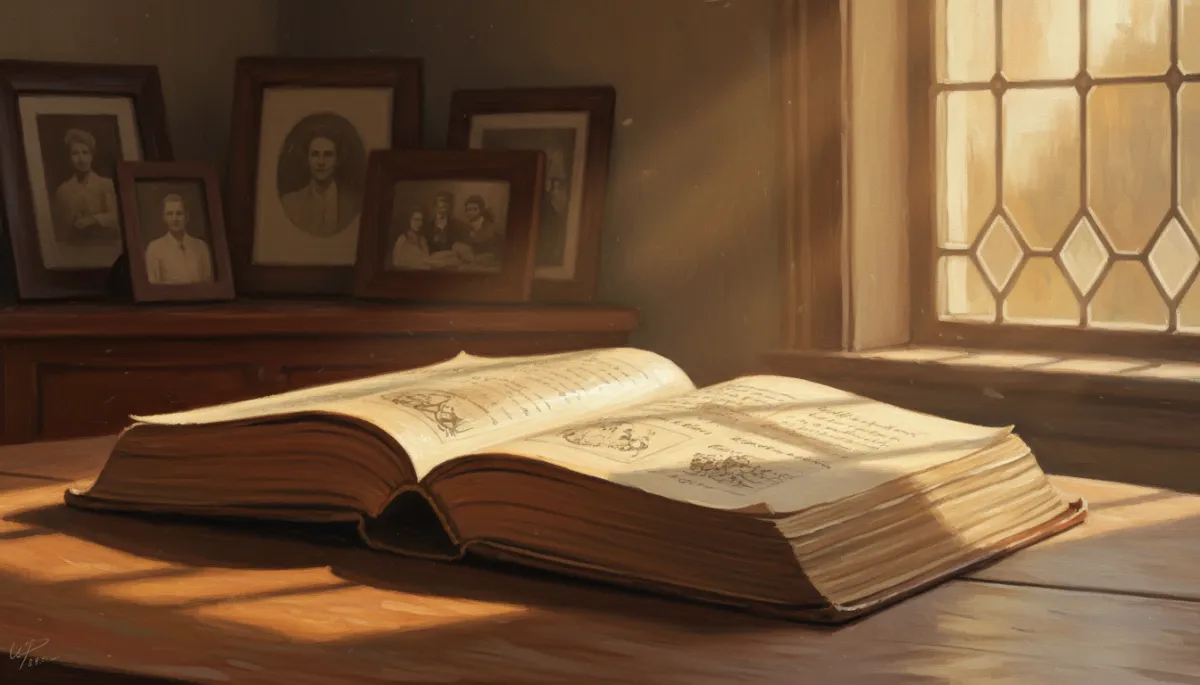
The Legacy You Leave Isn't What You Did. It's the Story You Tell.
Most people think about legacy in terms of accomplishment. What you built. What you earned. What your name was attached to. But the people who know you best — the ones who will grieve you most specifically, who will miss not just your presence but the particular texture of your mind — they will not remember your accomplishments the way you think they will.
They will remember your stories. The ones you told. The ones you kept. The ones they never got to hear.
The Gap Between Who You Were and Who They Think You Were
There is a version of you that your children know. And there is the full version — the person who existed before them, who had fears and failures and reinventions that your role as parent required you to set aside.
Most people take that fuller version with them when they go.
Not because they wanted to. Not because they thought the story didn't matter. But because no one asked at the right time, in the right way, with the patience to hear all of it. And because the format for telling it — sitting down to write a memoir — felt impossible, or arrogant, or like something you'd do when you finally had time. And there was never time.
What Your Family Will Actually Want to Know
Your children — whatever age they are — will one day want to know things that have nothing to do with your achievements. They will want to know:
- What were you afraid of, and how did you handle it?
- What's the hardest thing you ever did, and why did you do it?
- What did you almost give up on?
- What would you tell your younger self if you could?
- What do you want us to understand about what your life actually was?
These questions rarely get asked while there's still time to answer them fully. And the answers — the real ones, with context and specificity and the actual texture of what it felt like to live your life — exist only in you.
Legacy Is Not What You Leave Behind. It's What You Make Permanent Before You Go.
The distinction matters. Leaving something behind is passive — things get left behind whether you intended them to or not. Making something permanent is a choice. It requires you to decide, deliberately, that your story is worth preserving in a form that survives you.
That decision is not arrogant. It is the opposite. It is a gift — to the people who will grieve you, who will want to know you more fully than time allowed, who will raise their own children with questions about their roots and what came before.
The person who makes their story permanent says: I was here. This is what it was. I didn't disappear — I handed it forward.
Three Lives of the Book
People who go through the Rewrite Your Story process often use the book in ways they didn't originally anticipate. We think of this as the three lives of the book.
The first life is private. You read it yourself — often with the disorientation of hearing your own story reflected back with clarity and shape. Many people describe this as the first time they've understood their own life as a coherent arc rather than a series of things that happened to them.
The second life is family. You share it with the people closest to you. Parents reading their story with adult children who finally understand the context of their childhood. Grandparents handing a copy to grandchildren born into a family they barely know.
The third life is the world. When you're ready — and not everyone is, and that's fine — the story goes further. Into communities, archives, or the wider circle of people whose lives might be changed by knowing yours.
You own the copyright. You own the film rights. You decide which life the book lives, and when.
The Process That Makes It Possible
Rewrite Your Story exists because the traditional memoir format has always had a problem: it requires writing. And most people — people with full, rich, important stories — are not writers. They are speakers, thinkers, livers-of-lives who have things to say but no format that meets them where they are.
The Scribe does. In a 2–3 hour guided conversation — calm, unhurried, asking the questions most interviewers never think to ask — you speak your story. Not in order. Not with a plan. Just honestly. The Scribe finds the thread and follows it.
At the end, you have a 200–300 page hardcover memoir in your own voice. Delivered to your door. No writing. No blank page. Just a conversation — and then a book.
“What happened to you is permanent. What it means is not.”
The founding edition is open now at $397 for the first 100 people. After that, $497. Thirty-day full refund. Every purchase funds a free journey for someone who couldn't otherwise afford it. Your story, preserved, carries another story with it.
Begin Your Story →By Brian Kiplinger — Founder, Rewrite Your Story. Not a therapist, just a guy who built a tool he wishes existed.