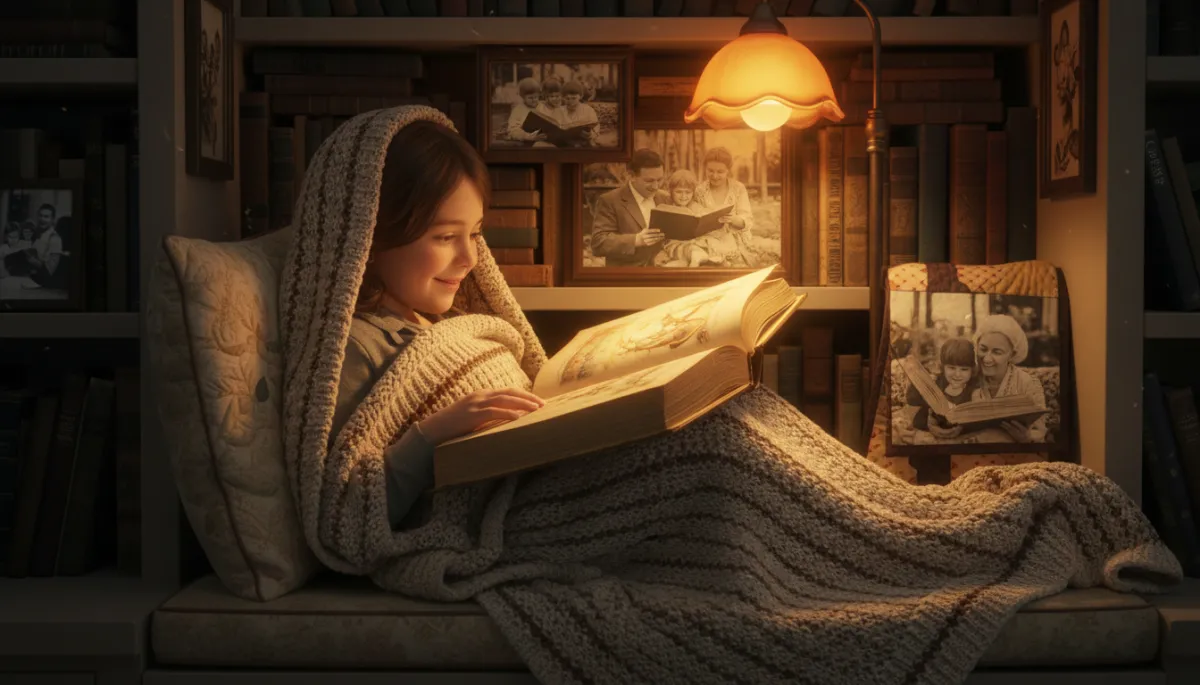
The Book Your Kids Will Read When You're Gone — And Why You Should Write It Now
There is a conversation that most families never have, even when the people in it love each other deeply and time is clearly running short. It's the conversation where someone finally asks: what was your life actually like? Not the version we grew up with. The real one. What did you go through before we were there? What did you want that you never got? What are you most proud of that we don't know about?
These questions almost never get asked at the right time. And the people who could answer them — fully, honestly, with the specific texture of memory — eventually can't.
This is one of the most universal and least discussed forms of grief: the grief of not knowing. Of losing someone before you knew them as a full person.
What Your Kids Don't Know About You
Think about what your children actually know about your life before them. Not the broad strokes — the actual texture. What it felt like to be twelve in your house. What you were afraid of at twenty-five. The relationship that changed how you understood people. The decision you made that you've never fully explained to anyone.
They don't know those things. Not because they don't care — but because there was never a format that made telling them easy, and the moments when you might have often got lost in the dailiness of living alongside each other.
And the assumption, implicit in most families, is that there will be time. Later. When things slow down. When everyone is in the same place. When it feels right.
Later is not a plan. It's a hope. And for the full version of your story, hope is a fragile container.
What Grief Actually Looks Like, Years Later
Talk to anyone who has lost a parent and found themselves, years later, wishing they'd asked more questions. The grief is specific in a way that's hard to articulate: it's not just missing the person. It's the awareness that there was a whole life you didn't know, a full human being behind the role of parent, and now the only version of that life that exists is the fragments — stories told in passing, photographs without context, the sense of a person without the substance of one.
This is the grief that a book prevents. Not the grief of loss — that comes regardless. But the grief of not knowing.
The Questions They'll Ask That No One Can Answer
At some point, your grandchildren — children who may not yet exist — will want to know where they come from. Not just genetically. Narratively. What were the people before them like? What did they go through? What kind of people does your family produce, and what made them that way?
These questions are, in many families, unanswerable. Not because the people weren't interesting or the stories weren't there — but because no one thought to preserve them in a form that survives the people who lived them.
A 200–300 page hardcover memoir is that form. Specific, permanent, and in your voice — the only voice that can tell your story the way it actually was.
The Three Lives of the Book
People use their book in ways they often don't anticipate when they begin.
Some keep the first copy for themselves — reading their own story with a clarity that the living of it rarely provides. Many describe this as the first time the full arc of their life became legible to them.
Some share it with their children. This is where the most unexpected things happen: adult children reading a parent's story and understanding, for the first time, the context of their childhood. The love that was always there, now visible in the record of everything it survived.
Some leave it for grandchildren. This is the deepest form of legacy — the gift to people who weren't there and never knew you, but who will one day want to. Who will hold a book and read the words of someone they never met, who was nonetheless the reason they exist.
The Process
You don't write the book. You speak it.
In a 2–3 hour guided conversation with Rewrite Your Story's AI Scribe — calm, unhurried, asking the questions most people have never been asked — you speak your story. Not in order. Not with a plan. The Scribe finds the thread.
At the end of the conversation, you have a manuscript. The manuscript becomes a 200–300 page hardcover memoir. It arrives at your door. In your name. You own the copyright. You keep the film rights. You decide who reads it and when.
“What happened to you is permanent. What it means is not.”
The people who will grieve you most specifically don't know your full story yet. You still have the chance to give it to them. Founding edition $397 · 30-day refund · Every purchase funds a free journey for someone who couldn't otherwise afford it.
Begin Your Story →By Brian Kiplinger — Founder, Rewrite Your Story. Not a therapist, just a guy who built a tool he wishes existed.